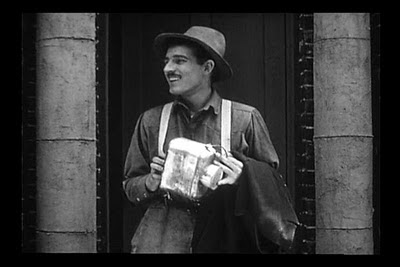
Showing posts with label Fifty Years/Fifty Films. Show all posts

Sunday, September 25, 2011

Fifty Years Fifty Films - The Eagle (1925)


Rudolph Valentino’s final two films under his Paramount contract in 1924 Monsieur Beaucaire and A Sainted Devil, were less than successful.  The fans were apathetic and Valentino had lost his box office mojo. 

Valentino’s contractual obligations to Paramount were now completed and he was soon set up to produce his first independent film under the banner of Ritz-Carlton Productions.  Number one on the docket was The Hooded Falcon; the story was penned by his wife, Natacha Rambova. 

In the summer of 1924 the Valentinos left for a European vacation/shopping trip for props and brocades for the costumes for The Hooded Falcon.  Before departure they left the scenario in the hands of June Mathis for a rewrite. 

Upon their return from Europe in the fall, the pair found Mathis’ treatment wanting and they ended their professional, and, for a time, personal relationship.  The head and pocketbook of Ritz-Carlton, J.D. Williams, insisted that it would be more cost efficient to film Cobra prior to The Hooded Falcon.  The company needed some cash coming in with a new release.  Neither was happy with the idea of Cobra, but had little choice since The Hooded Falcon was not ready to go into production.  Natacha began work on her own project entitled What Price Beauty and left Valentino to work on Cobra.

The excessive cost for The Hooded Falcon was due, for the most part, to the lavish spending in Europe.  The Valentinos had spent close to one third of the slated budget for the completed film before a single frame was shot.  Hooded Falcon appeared to be cursed.  After Cobra was in the can, the Valentinos and J.D. Williams parted company on not so friendly terms.  In short, Williams fired them and dissolved the company.  Nothing came of The Hooded Falcon except for some smoldering costume shots of Valentino sporting a mustache and goatee.
The Hooded Falcon
Valentino signed on with United Artists and John Considine (father of Disney Legend Tim Considine) was to act as producer for his films.  UA had, in fact, earlier hinted about inviting Valentino when he broke with Paramount in 1922.  Three years later he was welcomed into the fold.  A lavish dinner was held at the Ambassador to celebrate Valentino’s addition to the roster of stars.  Production of The Eagle was started in the early spring of 1925.  A lot was riding on The Eagle, Valentino knew it, too.  Rudolph Valentino was very badly in need of a box office hit. 

UA welcomes Valentino
The Eagle is based loosely on a Pushkin story Dubrovsky.  Considine employed Hans Kraly to fashion the tale into a scenario suitable for Rudolph Valentino.  Kraly is better remembered for his work with Ernst Lubitsch and his later work including The Patriot in 1930 (for which he won an Academy Award). Later, Kraly was also nominated for the adapted screenplay of The Last of Mrs. Cheyney and for Original Screenplay for the Deanna Durbin film One Hundred Men and a Girl in 1937.  Kraly’s scenario blended the Pushkin story with touches hinting at The Mark of Zorro and came up with a winning scenario.  There is just enough action, just enough romance and a nice dose of tongue in cheek humor that makes the film breeze along.


The sets were designed by William Cameron Menzies.  Certainly they were no more historically accurate than the sets for the later gothic and uber-bizarre The Scarlet Empress (Hans Dreier).  Menzies hinted at Russia with a California Romantica twist.  Historical accuracy to the period was not exactly uppermost or really appropriate for this romantic fantasy.  This was not what Valentino’s female fans went to the pictures for.


Louise Dresser in the 1934 Scarlet Empress


Valentino and Banky were opulently costumed by a then relatively unknown Gilbert Adrian.  Adrian got his start with Natacha Rambova and Valentino designing for Cobra and the costumes for the aborted The Hooded Falcon.  He would go on to do the costumes for Rambova’s previously mentioned film What Price Beauty (not released until 1928) as well as Valentino’s final film The Son of the Sheik.  Adrian is best remembered for his stunning work at MGM in the 1930’s.

Vilma Banky - costume by Adrian

Valentino is given ample opportunity to show not only his romantic skills, but also his wry comedic side in this film.  He plays three roles: Dubrovksy, the Cossack, the bandit/Robin Hood by the moniker the Black Eagle and impersonates French tutor Marcel LeBlanc.  Fans were less familiar with the lighter side of Valentino.  This film really contains one of his most engaging performances.  Light on his feet and quick-witted, this hero finds it more and more difficult to maintain or follow through on his vow of vengeance as his ardor for the daughter of his enemy grows.  Valentino took pride in doing his own stunts and he suffered a slight injury during filming which was reported upon in various newspapers.

Vilma Banky on loan from Samuel Goldwyn shines and shows a real rapport with Valentino on screen.  The barrier of language did not hamper the on-screen chemistry.  Publicity for the film played up the language differences in a series of charming stills showing Valentino and Banky poring over dictionaries in attempts to communicate.  Banky proved herself to be not only a beauty, but a charming and witty character.  Banky’s on screen chemistry would be very much in evidence in Valentino’s final film, The Son of the Sheik.

Director Clarence Brown was responsible for the casting of Louise Dresser as Catherine the Great.  Dresser was fresh off the success of her tour de force turn in The Goose Woman.  Brown related to historian Kevin Brownlow:
Louise Dresser was great as the Goose Woman. I paid her three hundred and fifty dollars as week. I used her again as Queen Catherine in The Eagle, for Schneck, and this time I paid her three thousand a week!

This truly was luxury casting.  The role of Catherine is not exactly large, but Dresser makes the most of her delightful seduction scene with Valentino.  She clearly enjoyed her turn as the royal vamp.

In a smaller role and in another bit of luxurious casting, favorite villain Gustav Von Seiffertitz is seen briefly in a cameo as Catherine’s butler.  Von Seiffertitz as well as Estelle Taylor (Mrs. Jack Dempsey) were cast for Valentino’s third UA film on the life of Christopher Columbus.  It was set to begin filming after Son of the Sheik.  Considine had also secured the talents of Charles Rosher to lens the film.  Sadly, Valentino died before production would begin.

Brown lines up a shot as Valentino watches
Valentino, himself, indulged in a little friendly nepotism casting his good friend Mario Carillo as the “real” Marcel LeBlanc.

One can admire the performances of each of the stars, but one also has to credit their rapport with and the direction of journeyman Clarence Brown.  Brown got his training under Maurice Tourneur and blossomed on his own with films such as Smoldering Fires and The Goose Woman.  Brown and Valentino got along famously given their love of all things mechanical.  Valentino also shared a special rapport with Brown’s young daughter Adrienne.  Many candid shots taken during filming illustrate that they both were quite taken with one another.  Brown’s light directorial touch is evident throughout the film.  A little bravura must also be noted in Brown’s, now famous, tracking shot along the grand dining table.  It was so good Brown used it again in Greta Garbo’s Anna Karenina (1935).

Adrienne Brown poses for a portrait with Valentino and his dog Mirza
The camera was manned by veteran George Barnes and assisted by Dev Jennings.  There is great depth of focus in many shots; shadows are used effectively and romantically.  Exteriors of the film were shot in the Griffith Park area.

Valentino was not in a happy place in his personal life during the filming of The Eagle.  His marriage to Natacha Rambova was breaking apart.  It seems clear he took some refuge from his personal troubles during the shoot.  He enjoyed the company of many visitors, old friends and new.  UA co-founder Douglas Fairbanks took the opportunity to visit the set for some publicity shots; Marion Davies a good friend of Valentino, stopped by; Bebe Daniels friend and former co-star paid a visit, as well.  Erich von Stroheim visited and posed very obligingly sporting dueling pistols with a bemused Valentino.  Valentino’s close friend, the Spanish painter Federico Beltran-Masses was staying at Falcon Lair painting two portraits of Valentino.  He later painted portraits of Marion Davies, Joan Crawford and Douglas Fairbanks Jr.  He spent many happy days visiting the set looking like he was having the time of his life. 

The filming completed in early summer, United Artists worked quickly and got the film ready for release on November 8, 1925.  Valentino traveled to New York for the premiere at the Mark Strand Theater and then made his way to London for the premiere at the Marble Arch Pavilion.  Valentino was joined by his brother Alberto and family in London.  Both brothers look natty in their tuxes at the premiere.

Alberto and Rudy at the London premiere
A report in Variety stated that in Philadelphia, many of the local dailies panned the film.  This did not deter the crowds from flocking to see the film; Variety also reported that the film did $27,000 in a single week in Philly.  In 1925 this was not exactly chump change with admission prices on average between .10, .27 and .40.

Other reviews from across the country indicated the film was for the most part a winner.  A short sampling reveals the film garnered some wildly varying reviews:

In Cleveland, the Times reviewed:
Rudolph Valentino in a type of picture which gives him an opportunity to prove the reason of his former popularity as the sheik of the screen. To say that he redeems himself in the eyes of the movie fan, would be putting it in mild terms.  Valentino not only proves he can act, but that he is a trained athlete as well.

Valentino still had a harder time in Detroit, shades of the Mineralava Tour!  Three papers had three different opinions:


The Detroit Free Press:
Ruddy (sic) doesn't have a great deal to do in the way of thrilling stunts, and at times the action drags.

The News:
Directed with some of the cunning of Lubitsch and acted in better grace and manner than Valentino has exhibited since his first big coming out party.

And finally, the Times:
In this production, Valentino works as he never has before, thrills as a daring bandit hero and grows more passionate than ever in his love making.


PHOTOPLAY reviewed the film and grudgingly gave it a pass:.
Rudolph Valentino changes his personality three times in his new picture and each one is dashing and fascinating and very Valentino. First, he is a young lieutenant of the Czarina's regiment, brave and handsome and desired of Catherine. When he deserts because he objects to "boudoir service," young Dubrovsky becomes a bandit, the Black Eagle, seeking to avenge a wrong done his father.
Next we see Rudy impersonating a French tutor in the house of his enemy, teaching the enemy's beautiful daughter. Dubrovsky falls in love. Shall he break his oath of vengeance?
The story really begins when Dubrovsky becomes the Black Eagle. The finish is weak and the characters not well drawn. Vilma Banky is Sam Goldwyn's gift to the screen. You will like Rudy and Vilma and the picture, in spite of its faults.

PICTURE PLAY also seemed ultra nit-picky in their review:


Rudolph Valentino after a short absence returns to the screen in "The Eagle." He has evidently determined to treat himself to the best this time, for he is directed by Clarence Brown, who superintended the making of "The Goose Woman," and he is supported by Vilma Banky and Louise Dresser.

With these advantages, it is only natural to expect "The Eagle" to be an intelligent, pleasant and finished picture, and it is just that and nothing more. Only the very greedy could ask for more, and I am sure that almost everyone will be pretty well satisfied with what Mr. Valentino has chosen to serve, but for some strange reason, the spark that brightened his first picture, "The Four Horsemen," has never flared up in anything that he has done since then.
Just what has died in his acting is hard to say. He seems to try conscientiously to revive it, whatever it is, but he lacks vitality. Of course, I'm not one that believes that actors burst into being overnight, and it may be that his sudden and victorious debut in "The Four Horsemen" was a pure bit of luck. However, "The Eagle" is by all means the best of his pictures since.
The story is of the love affair of a lieutenant of the Russian royal guard who refused the Czarina's more-than-tentative offer and is sentenced to death for scorning her. The plot that follows is a pretty complicated affair, and combined with the Russian names, would, if put end to end, reach from Picture-Play to The Literary Digest.
Vilma Banky is beautiful and natural as Mischa (sic), but Clarence Brown has not brought out the talent which she showed in "The Dark Angel," nor did Miss Dresser have much opportunity as the Czarina. Playing opposite a male star is really no job for a woman. After all, woman's place is in the home.
In the New York theater where I saw this picture, the aisles, lobby, and house were packed with people during its entire run, which only goes to prove that I am too fussy, and that Mr. Valentino's hold on the public can still be accepted without question.
Anyway, the picture is well worth seeing, and I don't think you’d regret devoting an evening to it.

So, history records that the film was well received, but not the smash hit everyone had hoped for.  That smash hit they were looking for would come later, and sadly, Valentino would not live to see it.

J.D. Williams negotiated distribution of Cobra through Paramount/Lasky and released Cobra on November 30, 1925.  For the record, Cobra was not well received and sank like a stone. 

Valentino charms Vilma Banky
Happily, in the modern age one can view The Eagle dispassionately and enjoy the film for what it was, a delightful bit of entertainment.  As I stated above, Valentino fans (even if you’re not) are treated to a thoroughly enjoyable film.  Valentino shows much warmth and charm in his role(s), he clearly relished the action sequences as well as the scenes with the beautiful Vilma Banky. 

Banky was fresh from the success of her American film debut, The Dark Angel for Goldwyn co-starring Ronald Colman.  She was also very successful in the lighter and more dramatic moments of the film.  Her blond beauty complimented Valentino.  It is no wonder she was signed on for The Son of the Sheik.

Clarence Brown also benefited from the success of this film, he moved on to MGM and stayed for over 20 years from silent to sound. 

For a full rundown of the intertitles, you can visit one of my favorite websites, intertitle-o-rama (http://intertitleorama.webs.com/eagle.html).

The Eagle is available on DVD (the Paul Killiam/Blackhawk Films print) Amazon link Carl Bennett's wonderful and informative site, SilentEra, has a run down of the various available versions here: http://www.silentera.com/video/eagleHV.html  

Sadly, the most  perfect and complete version is not available to be seen on DVD and is rarely screened.  I keep hoping and pestering that the Photoplay Productions restoration will be shown at the San Francisco Silent Film Festival.  I’m a glass half full kind of person and keep hoping!

There is also a nearly complete version to see on youtube here


Fifty Years/Fifty Films is my non-time-critical journey through the first fifty years of films. I'll be watching films that I've never seen or will be revisiting some very old friends. My original goal was to do this for the last six months of 2009 and you can see how well that went.

Tuesday, March 23, 2010

Fifty Years and Fifty Films - Gretchen the Greenhorn (1916)


Gretchen the Greenhorn (Triangle 1916)


I've long had a desire to see more Dorothy Gish films. I've seen her in Orphans of the Storm, some of the Biograph shorts and also in The Bright Shawl. In my quest, I was hopeful to see some films not directed by D.W. Griffith. This is not to say that I do not like Griffith films. Lordy, I do, just not all Griffith. For the record there are plenty I do like and quite love.
My point for seeing non-Griffith directed films has everything to do with Dorothy being famous for comedy and D.W. Griffith was not. When Griffith was working with Triangle in 1916 his mind was elsewhere. Other films were farmed out to other directors and Griffith was a "supervisor." At the time Dorothy was filming Gretchen the Greenhorn, Griffith was fully engaged in the film that would become Intolerance. The directorial duties for Gretchen the Greenhorn were performed by the brothers Sidney A. and Chester M. Franklin.


Gretchen musing during the crossing

I've got to say that the pickings are mighty slim for the home viewer and fan of Dorothy Gish. Happily, The Film Preservation Foundation included the UCLA restored 1916 Triangle picture Gretchen the Greenhorn in the second DVD set More Treasures From American Archives. The film stars Dorothy Gish, Ralph Lewis, Frank Bennett and a very nearly svelte Eugene Pallette. A good number of the Biograph stock players fill out the cast.

Ralph Lewis as Papa Van Houck

The story begins with Dutch immigrant John Van Houck (Ralph Lewis) having saved enough to send for his daughter Gretchen (Dorothy Gish) to emigrate to the United States from Holland. Ralph Lewis does pretty well with warm and fuzzy here (very unlike his role as the greedy and nasty father to Alice Terry in The Conquering Power - in which he was wonderful and nasty).

Gretchen arrives in stereotypical Dutch wooden clogs and carrying a duck, of all things. No customs, no Ellis Island, wham, just walks off the boat. No TSA in sight. This was filmed in Southern California and the budget just did not cover a trip to Catalina to emulate Ellis Island. Gretchen wanders about the dock area looking for her Papa and Papa wanders about looking for his Gretchen. She tries to ask directions from the local cop, but the language barrier proves too much. Miming does not help. After a few tense moments, Gretchen and her adoring papa are reunited. Interestingly, the shots of the reunion begin with the two of them in medium closeup and as they run to one another, we are treated to a view of the intimate reunion from the distance of a rooftop rather far, far away.

Gretchen and her duck having a bit of a language problem
with the local cop on the beat.

Gretchen is introduced to the neighborhood and meets Pietro (Frank Bennett), you can almost see the sparks fly. She meets the Widow Garritty (the always wonderful Kate Bruce) and her brood of children. The neighborhood hosts a welcome party and much merriment is had by all.

Papa is an engraver by profession and Gretchen takes over the daughterly duties of cooking, cleaning and making friends with all the neighbors. She falls in love with Pietro who reciprocates the feelings, but they're both more than a little shy about it. Their brief flirting scenes are utterly charming.

Frank Bennett as the amiable hero Pietro.

Enter bad guy Rogers (Eugene Pallette) who has moved into the tenement to scope out the engraving skills of Papa. Poor papa desperately wants a contract with the U.S. Government and is duped. He soon is working hard creating an engraving a plate from which counterfeit money indistinguishable from the real thing can be made.

In the meantime, kindly widow Garrity dying asks Gretchen to watch over her brood of children.


A buff Elmo Lincoln and Eugene Pallette conspire.

Rogers retrieves the bogus plate and he and his cronies in crime print off a bunch of funny money. Not wanting to implicate himself testing out the phony cabbage, Rogers gives a hot bill to Gretchen to buy groceries, and hopefully return with the change. The ruse works and the phony baloney bill is accepted as genuine. When Gretchen and Papa realize how they have been used, they make plans to expose Rogers. He's a crafty devil and he finds out their plans and he drags them to his hideout and locks them in.


The Garritty children reappear and witness the abduction and so alert the amiable Pietro. With the help of the police, he captures Rogers and then frees his sweetheart and her beloved Papa. Not so soon afterward, Pietro and Gretchen tie the knot. Happy days!

The 35mm print was in very good shape with some original tints. I have to say, this film does whet my appetite to see more of Dorothy Gish. She was fun and much more subtle than the modern film fan might imagine. What would have been a much more fluttery heroine than under Griffith’s direction at this point, she shows spunk, considerable charm and none of the what I like to call "Ooh! A bunny!" heroine. Perhaps because her character came well prepared and armed with duck in hand. She played shy, slightly hoydenish very well, the scenes of shy embarassment were punctuated by the quick darting out of her tongue as she laughed nervously. Hard to describe, but the effect was cute and natural.

The direction of the Franklin brothers was pretty intimate. Kate Bruce’s death scene was handled beautifully. Dorothy Gish had some room to move about and create her character. It was enormous fun to see Eugene Pallette in such an early role, not quite padded out for his later turn in The Three Musketeers with Douglas Fairbanks (or the very portly Friar Tuck in the 1938 Adventures of Robin Hood).

Dorothy Gish is so completely underappreciated and under-represented since so very few of her starring films survive. She was a gifted comedic talent, no question about it. One of the most sought after films is the single directing effort of her sister Lillian that starred Dorothy entitled Remodeling Her Husband. Lillian never made much to say over her own skill as a director, but she really praised Dorothy as an able comedienne. Nell Gwyn does survive, but I've missed all the screenings in the US, much to my regret. High on my wish list due to the Valentino connection is Out of Luck, only extant in stills. I'd also love to see Clothes Make the Pirate, not merely for Dorothy and Leon Errol, but for the chance to see Nita Naldi in a rare comedy.

I've also seen Dorothy as I mentioned above in The Bright Shawl. I enjoyed the film, but really feel that Dorothy was miscast and doing a Pola Negri Spanish Vamp impression. William Powell was excellent as the villain and Edward G. Robinson can be seen in a small character role, which was pretty neat. Romola is sister Lillian's film, but Dorothy and (again) William Powell totally steal the movie and have much better roles in this really dull as dishwater Henry King costume epic. I adore Ronald Colman, but not in this film, his regrettable wig has more life than he.

I have had the pleasure of hearing some interviews conducted with Dorothy in the 1960s and can only state she was a smart cookie, a delightful story teller and has a very musical and endearing laugh.

Our friends at the National Film Preservation Foundation are responsible for making this film available and they do such fine work. It's always a good thing to pass a little (legit) cabbage in their direction if you can afford it. The phrase "Nitrate Can't Wait" is entirely accurate and many a film or film fragment can be saved and preserved with your help. You can find a link to their wonderful DVDs on their website, another good way to support the efforts of film preservation. Must also give a shout out to our friends at UCLA who restored the film, thank you UCLA!

Fifty Years/Fifty Films is my non-time-critical journey through the first fifty years of films. I'll be watching films that I've never seen or will be revisiting some very old friends. My original goal was to do this for the last six months of 2009 and you can see how well that went.

Sunday, June 28, 2009

The Great Train Robbery 1903 - Fifty Years/Fifty Films


The iconic close up from the 1903 film

Whomever said overt violence on film is a sad reflection on the effects of modern technology and overexposure to violence in video games has never seen Edwin S. Porter's The Great Train Robbery released in 1903. Plenty of violence and plenty of bodies for a film that runs less than 12 minutes.


Filmed in the wilds of Fort Lee, New Jersey for Hollywood had not been invented yet, The Great Train Robbery is noted for being the first linear/storyline film. The film begins at plot point A and moves through plot point Z to the wow finish in a very compact fourteen scenes. In 1903 this was pretty revolutionary. With a running time of just under 11-12 minutes (depending on projection speed) it was a blockbuster.

The paybox is blown and the paymaster, dead

Having previously viewed this film in several film courses and in clips in any number of documentaries on film over the years, I confess, I tended to write it off as a primitive curiosity. It was with a more serious intent I sat down to view it again and have to say, I thoroughly enjoyed it. As a modern viewer with more than a few silent films under her belt, I'd say in spite of all the western cliches that spawned from this little film in the last 106 years, it's still a pretty good picture. A corker, in fact.

Surprisingly, this little film has given me a new appreciation for the Western genre. It's a genre I've often ignored for no good reason. I'm going to look forward to viewing some more early efforts by mostly forgotten cowboys like Art Acord, Fred Thomson, Tom Mix and WS Hart. Admittedly, the last two are not really forgotten, but it's new territory for me.

The final gun battle, the posse wins

Tim Dirks has a thorough review and break down of the film here.

The entire film can be seen here, including some original hand colored tints.


This film also is noteworthy for starting the career of another legendary cinematic cowboy and pioneering producer of the early silent era, G.M. "Broncho Billy" Anderson. David Kiehn has authored a fabulous book on Essanay, Broncho Billy and the Essanay Film Company, I highly recommend it. You can also see David and some great early films if you are in the SF Bay Area by visiting the Niles Essanay Silent FIlm Museum


G.M. Anderson as an innocent passenger, gunned down by the train robbers

I'm a little behind on chronicling where I am in the 50 years, 50 films, believe me, I've watched more than this. Hopefully a much fuller update over the Fourth of July Weekend.

Monday, May 18, 2009

Fifty Years and Fifty Films

Le scarabée d'or (1907)

My lofty goal for the next six months is to watch 50 different films and comment about them here. This initial list may change, in particular with regard to some of the older films this is subject to their availability on DVD. I also doubt the films will be viewed in chronological order.

Some of the films on this list of 50 are genuine Hollywood classics and well known to most people. That said, as much as I love them, you will not find The Maltese Falcon, Casablanca, Wizard of Oz, The Women or a billion other films on this list. I wanted to avoid some of the more obvious classic choices and to explore some films I've not seen as well as revisit a few very old and dear friends. I've seen roughly half of them previously. Most of those prior viewings were quite some years back, so the films will be nearly new again. A few are old and dear favorites and I simply could not imagine not listing them, Sunset Blvd, for example. I've sprinkled in a few foreign films, and really should have added more of them. Maybe save that for another posting reserved for all the foreign films I've never managed to watch (shame on me).

Some of the films on the list present the opportunity to view some very early screen debuts of later greats. A few titles I am not sure I will be able to view. I'm going to ask around for those, we'll just have to see how it plays.

tba - 1900
tba - 1901
President McKinley Inauguration Footage 1902
The Great Train Robbery 1903
The Mermaid 1904
The Whole Dam Family and the Dam Dog 1905
Humorous Phases of Funny Faces 1906
The Golden Beetle 1907
The Thieving Hand 1908
A Corner in Wheat 1909
Frankenstein 1910
The Lonedale Operator 1911
The Musketeers of Pig Alley 1912
The Perils of Pauline 1914
A Fool There Was 1915
Gretchen the Greenhorn 1916
The Poor Little Rich Girl 1917
The Cook 1918
The Roaring Road 1919
The Last of the Mohicans 1920
The Affairs of Anatol 1921
Flloish Wives 1922
A Woman of Paris 1923
Aelita Queen of Mars 1924
The Goose Woman/The Eagle 1925
The Winning of Barbara Worth 1926
The Cat and the Canary 1927
Lonesome 1928
A Cottage on Dartmoor 1929
City Girl 1930
The Millionaire 1931
The Mummy 1932
Footlight Parade 1933
Crime Without Passion 1934
Captain Blood 1935
Sabotage 1936
The Prisoner of Zenda 1937
Holiday 1938
The Women 1939
The Letter 1940
The Devil and Miss Jones 1941
Random Harvest 1942
Destination Tokyo 1943
The Uninvited 1944
The Picture of Dorian Gray 1945
The Razor's Edge 1946
Kiss of Death 1947
Sudden Fear 1948
Kind Hearts and Coronets 1949
Sunset Blvd. 1950
L'éclipse du soleil en pleine lune (1907)